


One question comes up often: Should I choose a term deposit or a diversified managed fund?
The answer depends on your goals, when you may need the money and how comfortable you are with changes in its value.
Term deposits and managed funds can both have a place in an investment plan. They simply serve different purposes.
A term deposit offers more certainty over a set period. A diversified growth-focussed managed fund aims to grow your money over a longer period, with the understanding that its value will rise and fall along the way.
Knowing the difference can help you choose an option that better fits your plans. 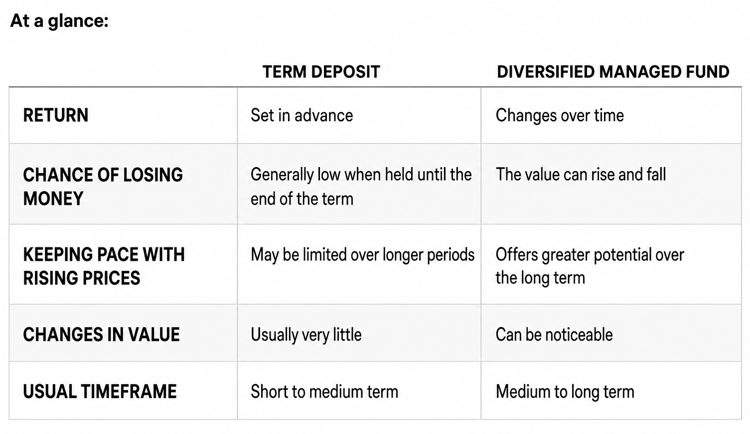
How rising prices can affect your money
The cost of everyday goods and services usually increases over time. This is known as inflation.
Inflation does not reduce the number shown in your bank account. It can, however, reduce how much that money will buy in the future.
For example, if prices increased by just 2% each year, the buying power of $10,000 would gradually fall:
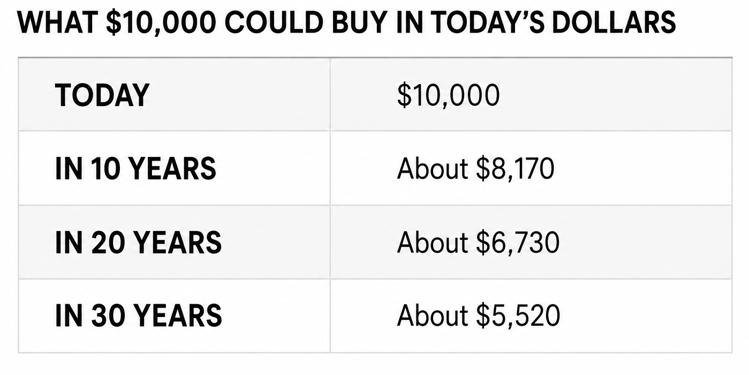
This example assumes inflation of 2% and is provided as a simple illustration only.
Why people choose term deposits
A term deposit can give you a clear idea of what to expect.
You know the interest rate, how long the money will be invested and approximately how much you will receive at the end of the term.
This certainty may be useful when:
- You expect to need the money within the next few years.
- Avoiding changes in value is important to you.
- You are saving for a known cost on a set date.
Things to be aware of that may make term deposits less suitable
Over longer periods, term deposit returns may not rise much faster than, or may even lag behind, the cost of living.
You may also face a fee or receive less interest if you need to withdraw the money before the agreed end date. The exact rules depend on the provider.
Why people choose diversified managed funds
A managed fund brings money from many investors together. Professional investment managers then invest that money across a range of investments. The fund’s performance will depend on the assets and markets it invests in. These may include New Zealand and international shares, property, bonds and cash.
Some funds will be more cautious, while others will aim for higher growth, which of course comes with the possibility of greater losses in value.
Spreading money across different investments can reduce the effect of one investment performing poorly. It cannot remove risk completely.
Managed funds do not provide a set return. Their value will rise and fall as investment markets change.
They are generally intended for people who have more time available before they need to use their money and want greater potential for long-term growth.
Where a portfolio is accessed through Lemmi, Lemmi helps match the portfolio to the client’s goals, timeframe, comfort with risk and financial position. The underlying portfolios are managed by professional investment managers.
Looking at risk from two sides
Many people think of risk as the chance that an investment may fall in value. This is an important risk to consider.
There is also the risk that your money may not keep pace with rising prices. Over time, this could make it harder to afford the lifestyle you are planning for.
The chart below compares US investment returns after inflation across several periods. It shows that US shares provided higher average returns than cash over the periods shown, however it would have experienced greater changes in value within the period.
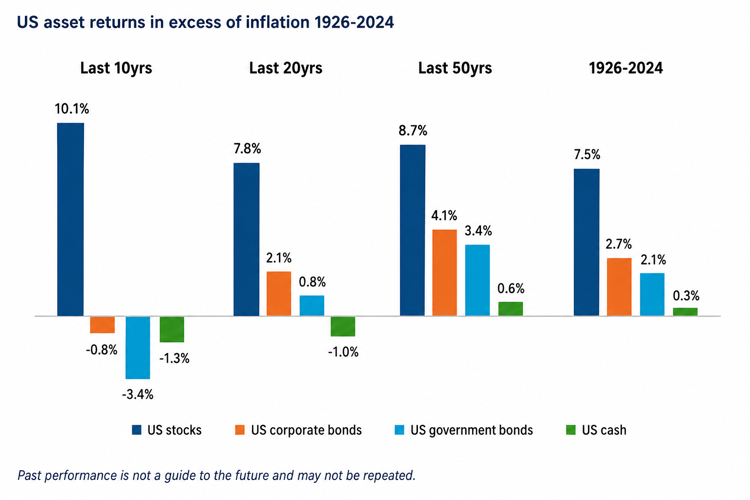
Source: Schroders. Note: US information has been used because reliable records are available over a long period. New Zealand investments may have performed differently.
How growth can build over time – the power of compounding
When an investment earns a return, future returns may be earned on both the original amount and the earlier returns.
This can help money grow more quickly over a long period.
Even a small difference in the average yearly return can create a much larger difference after 10 or 20 years.
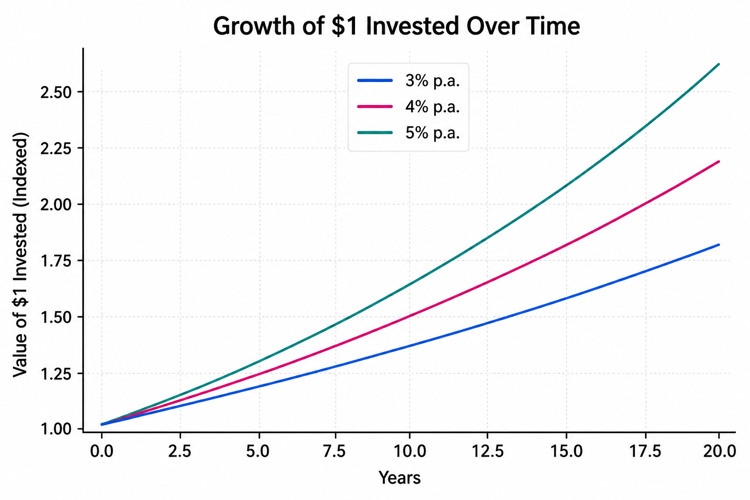
This chart shows how $1 could grow over 20 years at yearly returns of 3%, 4% and 5%. The example assumes the returns remain invested. In reality, actual returns will change from year to year and may even be negative at times.
Understanding market ups and downs
Greater growth potential usually comes with larger changes in value.
A diversified managed fund may fall in value, sometimes by a significant amount. A term deposit held until its end date generally does not experience the same day-to-day changes.
This is why your timeframe matters.
When you have more time, there may be a better opportunity for an investment to recover from periods when markets fall. More time does not guarantee a positive result.
Money you expect to need soon may be better suited to an option with greater certainty. Money intended for a longer-term goal may be able to take on more movement in search of higher growth.
Which option may suit you?
A term deposit may suit a shorter-term goal when knowing how much money will be available is especially important.
A diversified managed fund may suit a longer-term goal when you can accept changes in value and want greater growth potential.
You may also decide that both have a place in your plan. For example, money needed soon could be held in a more stable option, while money for a distant goal could be invested for growth.
That said, if you are a bit nervous about investing and not keen on taking risks, even moderate ups and downs in an investment could cause you to sell just at the wrong time, so it is important to know how comfortable you are with that and get advice.
The right combination is the one that helps you meet your goals but also allows you to sleep at night especially when investment markets experience sharp fluctuations.
Important information
This article provides general information only. It does not take your personal circumstances into account and is not personalised financial advice or a recommendation to choose any investment, product or service.
All investments involve risk, including the possibility of losing money. Returns are not guaranteed, and past performance does not reliably predict future results.
Before making a financial decision, consider your goals, timeframe and financial position. You may also wish to seek personalised advice from a qualified financial adviser.